



Listen to the Quick Audio Summary of This Article
Everyone fixes the obvious things first.
But here’s the truth:
That’s not what moves rankings anymore.
Broken links, missing meta tags, slow pages – these are important, but they’re also expected. Fixing them doesn’t give you an edge anymore. It just keeps you from falling behind.
The real movement in rankings comes from something else entirely: understanding how search engines actually experience your website.
Log File Analysis: Seeing What Google Really Does
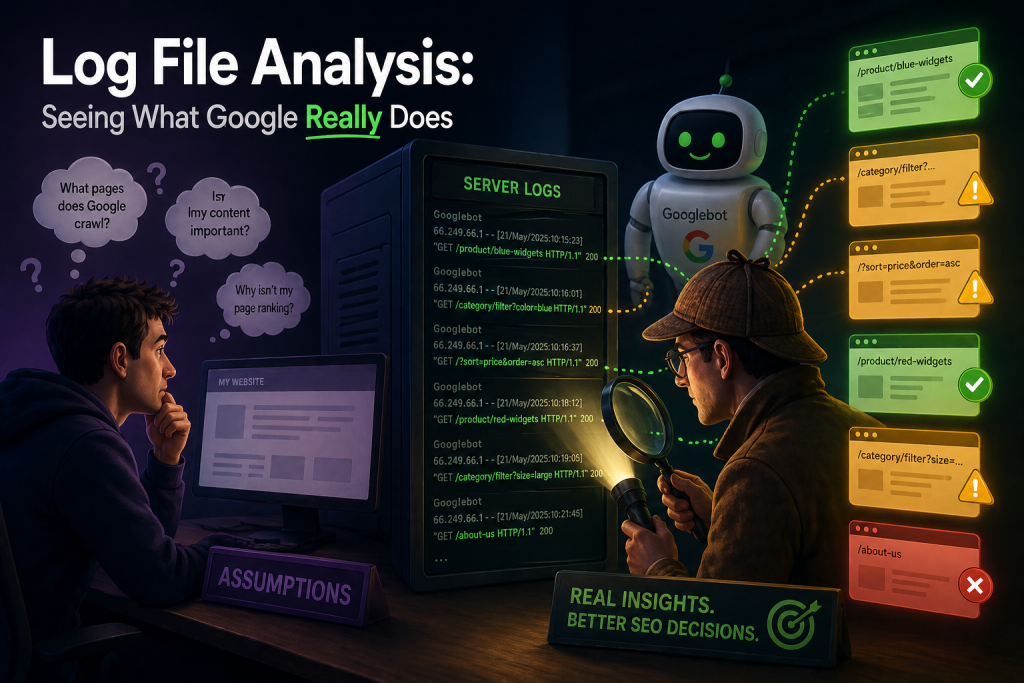
Most SEO decisions are based on assumptions -what we think Google is doing.
Log files remove that guesswork.
Every Googlebot visit is recorded on your server. When you analyze those records, you start to notice patterns: pages that are crawled frequently, pages that are ignored, and sections of the site where crawl budget is quietly being wasted.
This is where things get interesting. You might discover that Google spends more time crawling filtered URLs or parameter-based pages than your actual product or service pages. On the surface, everything looks fine – but in reality, your most important content isn’t being revisited often enough to compete.
That’s why log analysis matters. It shifts your focus from “Is my site optimized?” to “Is Google even paying attention to the right pages?”
JavaScript Rendering: The Gap Between Design and Visibility
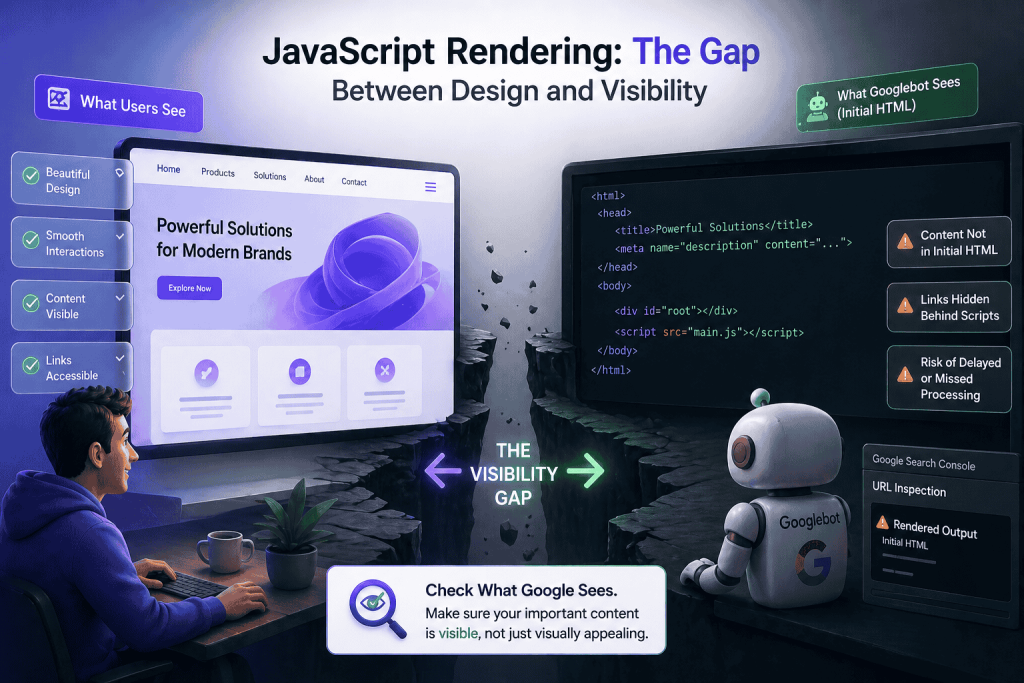
A page can look perfect to users and still underperform in search.
The reason is simple: Google doesn’t always see what users see.
Modern websites rely heavily on JavaScript, but search engines still depend first on raw HTML. If key content or links only appear after scripts load, there’s a risk that Google either delays processing them or misses them entirely.
This creates a subtle but powerful disconnect. Your navigation might be beautifully designed, but if it isn’t easily accessible in the initial code, it weakens how your site is understood.
Using tools like Google Search Console to compare rendered output isn’t just a technical step – it’s a reality check. It tells you whether your content is truly visible, not just visually appealing.
Most SEO audits rely on tools that simulate crawling.
But log files show what really happens – not what should happen.
What this actually means:
Every time Googlebot visits your site, it leaves a trace in your server logs. By analyzing those logs, you can see:
- Which pages does Google prioritizes
- Which pages does it ignore
- How often does it revisit important content
Why it matters in simple terms:
Imagine you wrote a great page, but Google only visits it once every 3 months.
That page won’t rank – not because it’s bad, but because it’s not being revisited enough to stay relevant.
The real takeaway:
Log file analysis helps you stop guessing and start aligning your site with Google’s actual crawling behavior, not assumptions.
Internal Linking: Where Your Authority Quietly Leaks
Your website might look perfect to users.
But Google doesn’t see your site the same way.
What’s really happening:
Search engines first read your raw HTML, then (sometimes) process JavaScript later.
If important content or links only appear after JavaScript loads, Google may:
- Miss them
- Delay indexing
- Assign less importance
Simple example:
If your product links are hidden inside JavaScript menus, Google might not discover them properly.
Why this matters:
It creates a gap between:
- What users experience
- What search engines understand
Every link inside your site carries weight.
But most websites don’t control how that weight is distributed.
Instead, authority often flows toward pages that don’t really deserve it – filtered views, pagination, archived content. These pages exist for usability, but they rarely contribute to rankings. Still, they end up attracting search engine attention.
Meanwhile, the pages that actually matter – your services, key landing pages, high-conversion content – don’t always receive the same level of internal support.
This isn’t a technical error. It’s a structural inefficiency.
When internal linking is treated strategically, it becomes one of the most powerful ranking signals you control. It’s less about adding more links and more about guiding search engines toward what truly matters.
The real takeaway:
Good SEO isn’t just about design – it’s about ensuring your content is accessible in the first place.
Use tools like Google Search Console to compare what Google actually renders.
Orphan Pages: Content That Gets Left Behind
Every website has a limited amount of “authority” to pass through links.
The problem?
Most sites don’t control where that authority goes.
What this really means:
When you link to a page, you’re telling Google:
“This page is important.”
But many sites unintentionally send that signal to:
- Filter pages
- Pagination
- Low-value archives
Why it matters:
Important pages (such as services or key products) often receive less authority than they should.
Simple way to think about it:
It’s like distributing your marketing budget –
If you spend it on the wrong channels, results drop.
Some pages don’t fail because they’re weak.
They fail because they’re disconnected.
Orphan pages are simply pages that no other page links to. They exist, they’re live, sometimes even well-written – but they sit outside your site’s structure.
From a search engine’s perspective, that lack of connection sends a signal: this page isn’t important.
It often happens quietly. A blog post is published and never linked again. A product is removed from navigation but still exists. A redesign shifts menus, leaving content behind.
The result is the same – valuable content becomes invisible over time.
Tools like Screaming Frog SEO Spider can help uncover these pages, but fixing them is more about intention than tools. Every important page should have a clear place within your site’s ecosystem.
The real takeaway:
Internal linking should be intentional.
You’re not just connecting pages – you’re guiding search engines toward your most valuable content.
Page Speed: Why Averages Mislead You
When someone says, “Your site is fast,” it usually means the average looks good.
But averages hide problems.
A homepage might load quickly and bring the overall score down, while deeper pages – product pages, service pages, checkout flows – carry heavier scripts, larger images, and more complex elements.
These are also the pages that matter most for rankings and conversions.
Search engines don’t rank your average performance. They evaluate individual pages.
So if your key pages are slow, that’s what impacts visibility – regardless of how optimized your homepage is.
Looking at performance by page type gives you a much clearer picture of where improvements will actually make a difference.
The real takeaway:
Don’t rely on averages.
Break performance down by:
- Page type
- Business importance
- User journey
Final Thought: The Shift from Fixing to Understanding
The biggest shift in technical SEO is this:
It’s no longer about fixing obvious problems
It’s about understanding hidden inefficiencies
When you:
- Align with crawl behavior
- Ensure true content visibility
- Control internal authority
- Strengthen content connections
- Optimize critical page performance
You move from “optimized website” → high-performing SEO system
Technical SEO has evolved. It’s no longer about running a checklist and fixing what’s broken. It’s about understanding how search engines interact with your site – where they spend time, what they miss, and how your structure influences their decisions.
The biggest gains don’t come from doing more.
They come from seeing what others overlook – and correcting it with intent.
Want to uncover hidden SEO issues on your website?
Let’s run a technical SEO audit focused on what actually impacts rankings – crawl behavior, rendering, and internal link flow.
Get in touch today with us, the best SEO agency in Abu Dhabi, and discover where your real growth opportunities are.

services

Advanced SEO Schema Markup Strategies for 2026
Feel free to send us a message.
Please, share your thoughts, and let's chat over a cup of tea.